In the Footsteps of Mokranjac
Machine translation from Serbian, not reviewed. Original in Serbian

That concert is neither the only reason nor the sole purpose for taking a walk through time and recalling the versatility and importance of this great figure in Serbian musical history. The reason this article had to appear on September 28 itself, the day Mokranjac died, a hundred years later, is respect, reverence, and the knowledge that we have only one like him—the great Stevan, the steadfast Stojanović, the widely renowned Mokranjac!
Although he lived and worked mainly in Belgrade, traveled across Europe from the Bosphorus to Saint Petersburg, and died in Skopje (the birthplace of his mother, Marija Milanova Stojanović), it is in Negotin that Mokranjac’s spirit is most alive. A street, the main square, the music school, a pharmacy, and a local café all bear his name. For 49 years, the “Mokranjac Days” festival has faithfully fostered the beauty and energy of choral singing and liturgical chant, and the music of Stevan Stojanović echoes through the hall of the Cultural Center, the churchyard of St. George’s Church, and the classrooms of the Music School…
There in Negotin, bathed in rain this September, stands his well-preserved birth house, now a museum—a rammed-earth building with low ceilings, authentic furniture, rugs, household utensils, photographs, and an icon of St. Nicholas (the patron saint of the Stojanović family), all housed in the two rooms to the left of the entrance where the large family lived. This was the house where Mokranjac first breathed the air of Krajina, where his sister first taught him to read and write and his older brothers tutored him, and where his mother sang to him by the hearth. Through song she introduced him to the inexhaustible source of his future artistic inspiration: the beauty, sincerity, courage, emotional depth, and poetry of traditional secular and church music. She sang, and he took it all in with his keen ear and natural talent. Mokranjac wove his inherited gifts and the melodies deeply embedded in his childhood memories together with the Western European tradition he studied in Munich, Rome, and Leipzig, his experience in choral conducting and singing, and his sincere, deeply rooted connection to his Serbian and Macedonian roots and the South Slavic tradition. The result was a rich body of compositions: his series of 15 Song Garlands, Coastal Melodies, The Goatherd, Village Girls, the solo songs Lem-Edim and Three Heroes, music for the play Ivko’s Slava, the Funeral Service, the Liturgy of St. John Chrysostom, the Cherubic Hymn, We Praise You, O God, the Akathist to the Mother of God, Psalm 137 and many other authentic and distinctive works of musical realism, akin to the work of the first Serbian realist writers, Milovan Glišić and Laza Lazarević.
The right side of the museum, purchased later and converted into a memorial room, offers a vivid look back at Mokranjac’s principal roles: music teacher at the First Belgrade Gymnasium, chant teacher at the Seminary, collector and transcriber of traditional secular and church melodies, author of the first folkloric study of those melodies and a pioneer of musicology in Serbia, dedicated choral singer and longtime conductor of the First Belgrade Choral Society (1887–1914), driving force behind the Union of Choral Societies (1903), founder of Serbia’s first string quartet (1889), founder, teacher, and principal of the first music school in Belgrade and in Serbia (1899), which still bears his name, corresponding member of the Serbian Royal Academy (1906), and corresponding member of the French Academy of Fine Arts (1911). One corner of the memorial room faithfully recreates Mokranjac’s Belgrade study, with a writing desk, fountain pen and ink, sheet music, a piano, portraits, and two sculptures—Lyre and Lighthouse, the latter engraved with the titles of all Mokranjac’s works.
In the courtyard of his birth house stands a monumental sculpture of the noble artist in a proud pose.
The “Krajina” Museum in Negotin also preserves mementos of the Serbian musical poet: boxes of original postcards from European concert tours with the First Belgrade Choral Society, written in long strokes of black ink and addressed to his wife, Milica (Mica), née Predić, as well as a book of the telegrams the Stojanović couple received for their wedding. Her words bear touching witness to the deep emotional and artistic bond between choir member Milica Predić and conductor Stevan Stojanović, who always put her in the front row, right in front of him, so he could keep looking at her up close: “I entered a new life with the greatest wish to make you happy, to make life sweet for you, so that you could devote yourself with even more eagerness and love to your calling, to your Song Garlands, which I too loved so much.”
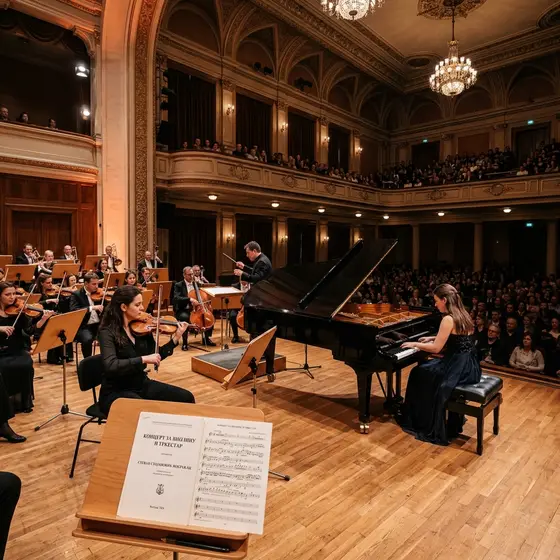
Today, September 28, 2014, 1,100 singers will sing the Liturgy and Funeral Service at the Church of St. Sava to mark the centenary of Mokranjac’s death. There will be an exhibition on his life and work, a screening of the film “Mokranjac Forever,” choral concerts, a presentation of Mokranjac’s instrumental music, lectures by experts, and a program for children titled “How to Listen to Mokranjac.” All this for the artist and diplomat, educator and creative spirit, active participant in public life and perceptive, original analyst of Serbian spiritual and material culture, singer, violinist, conductor, and composer—the great Stevan, the steadfast Stojanović, the widely renowned MOKRANJAC!
***
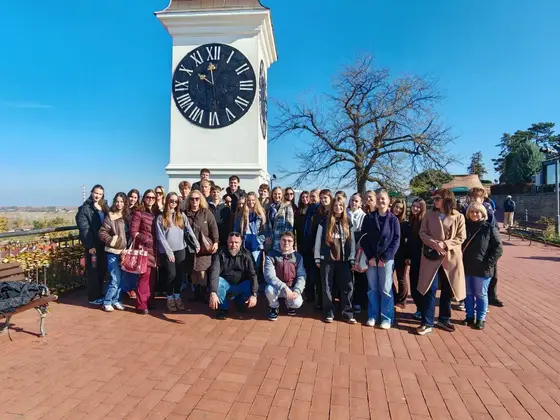
The commemoration of Mokranjac also brought together 64 former and current students of Music School “Isidor Bajić,” as well as four teachers: Marko Asurdžić, Ana Kovačić, Danijela Kličković, and conductor Tamara Adamov Petijević. The school’s mixed choir also received a certificate of appreciation for taking part in this moving and dignified artistic event.
Danijela Kličković
assistant principal