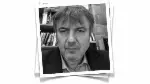
About Isidor Bajić
Machine translation from Serbian, not reviewed. Original in Serbian
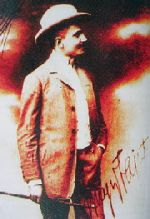
The name Isidor Bajić is synonymous with the wide-ranging creative spirit that marked many areas of musical life in Novi Sad and Vojvodina at the turn of the 20th century. He was an educator, organizer of musical events, music writer, publisher, transcriber of melodies, and composer (known for choral works such as “Serbian Woman” and “Hey, Who Bought You,” …)
He was born in Kula on August 16, 1878. He completed his gymnasium studies in Novi Sad, where, while still a student, he helped his teacher Jovan Grčić with musical activities. He began composing in sixth grade and conducted the student choir in eighth grade. After returning from Budapest, where he first studied law and then attended the Music Academy, he became a full-time teacher of chant and singing at the Great Serbian Orthodox Gymnasium in Novi Sad (now Gymnasium “Jovan Jovanović Zmaj”), where he worked from 1901 to 1915. He also taught students to play the violin, piano, and tambura, formed a string orchestra and a tambura orchestra, conducted the gymnasium choir, and helped talented students take their first steps as composers. The concerts he organized, especially the Saint Sava commemorative programs, went beyond the standard and scope of amateur school performances.
Bajić’s work as an educator led to his “Proposal to Reform the Teaching of Chant and Singing at the Great Serbian Orthodox Gymnasium” (1912). He founded the Music School in Novi Sad in 1909, the first institution of its kind in Vojvodina after the “school of chant” founded by Aleksandar Morfidis-Nisis.
He published writings on music and music education in nearly all the periodicals and daily newspapers of the time (Brankovo kolo, Letopis Matice srpske, Zastava, and Sloga). These included “Singing as a Teaching Tool and Its Benefits,” “Serbian Church, Folk, and Dance Music,” “How to Protect and Care for the Voice,” “How Music Should Be Taught in Teacher Training Colleges and Seminaries,” and “Our Church Chant,” among others. A series of articles on the Union of Serbian Choral Societies sparked a heated public debate with Petar Konjović. He launched the “Serbian Music Library” sheet music series and the journal “Serbian Music Gazette” (the third Serbian music journal in order of publication). He wrote and published two textbooks: “The Piano and How to Learn to Play It” (1901) and “The Theory of Singing Correctly from Notation” (1904).
He transcribed folk melodies and Serbian church melodies and used them in his piano compositions, choral works, plays with singing, and the opera “Prince Ivo of Semberija.” He compared Serbian church chant with that of other peoples while traveling to Hilandar with the Karlovci seminary choir in the summer of 1911. He personally addressed His Grace Lukijan Bogdanović, the Serbian Orthodox Bishop of Buda, about a proposal to revise Serbian church chant (1907).
As a composer, he worked in genres suited to the musical tastes and performance standards of his time: solo songs (the cycle “Songs of Love,” “Album of Songs in the Spirit of Serbian Folk Songs,” “Serbian Folk Songs from Mokranjac’s Song Garlands,” “Village Girls,” and “Autumn Is Coming, My Quince”); piano compositions (“Album of Piano Compositions,” “For Kosovo–Kumanovo, for Slivnitsa–Bregalnica,” and “Serbian Rhapsody”); chamber works (“Song Without Words,” “Pizzicato Polka,” and “Romance”); orchestral works (“The Fog Descended,” “Elegy,” and “A Farewell to Draga Ružicka”); choral compositions (“A Song About Song,” “The Hunters’ Gathering,” “Divine Liturgy,” “The Death of the Gusle Player,” “From My School Days,” and “From My Garden”); plays with singing (“Đido,” “Brandy,” “Change,” and “Wild Girl”). The opera “Prince Ivo of Semberija,” based on the historical play of the same name by Branislav Nušić, was the fifth Serbian Romantic opera with national themes to be composed and the second to be performed. It premiered on January 6/19, 1911.
He died in Novi Sad on September 16, 1915. He was only 37 years old.