

Claude Debussy - A MAJOR ANNIVERSARY
Machine translation from Serbian, not reviewed. Original in Serbian
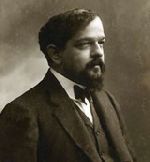
Debussy’s music virtually defines the transition from late Romantic music to the modernist music of the 20th century. In French literary circles, the style of this period was known as Symbolism, a movement that directly inspired Debussy both as a composer and as an active participant in cultural life.
Debussy was born in Saint-Germain-en-Laye in 1862, the eldest of five children. His father, Manuel-Achille Debussy, owned a ceramics shop, and his mother was a seamstress. Debussy began playing the piano at the age of four with an older Italian teacher named Cerutti.
In 1871, the young Debussy caught the attention of Marie Mauté de Fleurville, who claimed to have been a pupil of Chopin. Debussy always believed her, although it was never established whether this was true. His talent soon became apparent in 1872, when he enrolled at the Paris Conservatory at the age of 11. He spent the next 12 years of his life at the conservatory. During that time, he studied composition with Ernest Guiraud, music history and theory with Louis-Albert Bourgault-Ducoudray, harmony with Émile Durand, piano with Antoine-François Marmontel, organ with César Franck, and solfège with Albert Lavignac, as well as studying with many other important figures of the period.
Debussy’s talent was more than evident from the very beginning. He often experimented and challenged the academy’s strict teachings. He preferred dissonances and intervals that were not popular at the time. Like Georges Bizet, Debussy was a brilliant pianist and could have pursued a professional career had he wished. The works he performed most often were sonatas by Beethoven, Schumann, and Weber, as well as Chopin’s Ballade No. 2, a movement from his Piano Concerto No. 1, and his Allegro de Concert, a relatively little-known work that demands an even higher degree of virtuosity than any other concerto.
From 1880 to 1882, he lived in Russia as a music teacher to the children of Nadezhda von Meck, Tchaikovsky’s patron. Despite von Meck’s close relationship with Tchaikovsky, Tchaikovsky had little or no influence on Debussy. In 1880, Nadezhda von Meck sent Debussy’s Danse bohémienne to Tchaikovsky to look over. A month later, he replied in a letter: “It is a very beautiful piece, but it is far too short. Not a single idea is fully expressed, the form is terribly cramped, and it also lacks unity.” Debussy never published the piece; the manuscript remained with the von Meck family and was later sold to B. Schott’s son in Mainz, where it was published in 1932. A greater influence on Debussy was his close friendship with Madame Vasnier, a singer he met when he first began working as an accompanist to earn some money. She gave Debussy emotional and professional support and influenced his early songs, which were inspired by the work of the Symbolist Paul Verlaine.
Debussy led a turbulent private life. At 18, he began an eight-year affair with Madame Blanche Vasnier, the wife of a prominent Parisian lawyer. The relationship ended when Debussy left for Rome. After returning to Paris, he lived with Gabrielle Dupont for nine years without marrying her, then married her friend Rosalie (Lily) Texier in 1899. Though Texier was a gentle, practical woman loved by Debussy’s friends and associates, he was irritated by what he saw as her narrow outlook and lack of a feel for music.
For that reason, he left Texier in 1904 for Emma Bardac, the wife of a Parisian banker and the mother of one of his students. Unlike Texier, Bardac was refined, a brilliant conversationalist, and an amateur singer. Distraught, Texier, like Dupont before her, attempted suicide with a gun. The scandal forced Debussy and Bardac, who was already carrying his child, to flee to Eastbourne, England, where he completed his symphonic suite La Mer (The Sea). The couple married in 1908.
Their daughter was named Claude-Emma, also known as Chou-Chou, to whom the Children’s Corner suite was dedicated. Claude-Emma outlived her father by barely a year, dying in the diphtheria epidemic of 1919.
Debussy died of colon cancer in Paris in 1918. During World War I, the situation in France was desperate, and circumstances did not allow for a public funeral with honors or a ceremony. The funeral procession passed through deserted streets devastated by German attacks. He was buried in the small Passy Cemetery, tucked away behind the Trocadéro.
French culture has since celebrated Debussy as one of France’s most distinguished representatives.