

How Can You Recognize Your Child’s Talent?
Machine translation from Serbian, not reviewed. Original in Serbian
Talent must be recognized early
— The study of giftedness was very quickly divided into two broad categories: academic giftedness and creative-productive giftedness. The latter can emerge very early, but it also needs to be recognized by those around the child. Take, for example, a preschooler who, after a story about Saint Sava is read, is asked by the preschool teacher to draw Saint Sava and draws a window on a sheet of paper. When asked why they drew a window when the subject was Saint Sava, the child replies, “Well, that’s Saint Sava. Didn’t you say he broadened people’s view of the world? That’s like when we look through a window to see the world,” says child psychologist Aleksandra Mađar. 
Children start showing what they like and what they can do as early as age two. As more and more experts emphasize the influence of a child’s environment on the development of talent, support from adults is especially important.
— All current theories emphasize the importance of environmental influences in developing a child’s gifts, without downplaying the importance of the gifted child’s personal traits. Parents should find out which activity holds their child’s attention the most. Even very young children display a wide range of abilities, including musical potential, an excellent memory, spatial intelligence, and many others, the psychologist adds.
Unfortunately, people around these children sometimes ridicule them for their gifts.
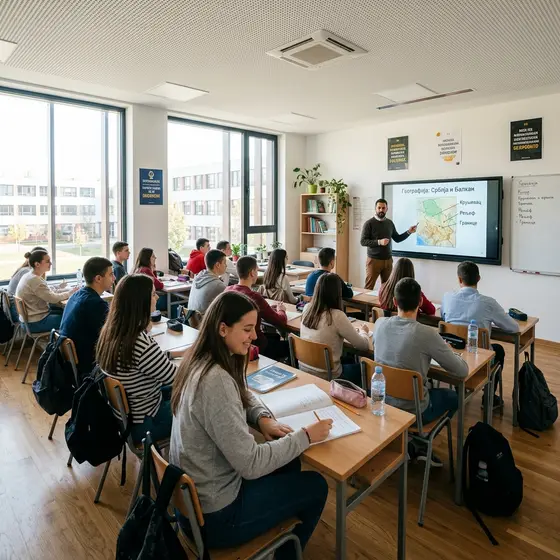
— People often fail to recognize potential when it emerges early. They react rigidly to anything unusual, which makes it harder for children to develop their abilities. Talented children may be mocked by their peers and even by their teachers. To fit in better, they turn away from their talents and become average. Underachievement among talented students is a particularly pronounced problem in our schools. To prevent this, parents must encourage their children and teach them how to handle negative reactions, the psychologist advises.
If children’s talent isn’t supported, it won’t necessarily disappear, but it won’t develop as it should.