Vojislav Vučković and His Era
Machine translation from Serbian, not reviewed. Original in Serbian
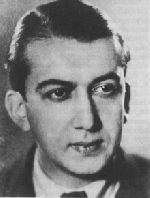
With the fall of communist ideology, the glorification of Vučković and his music came to an end. Today, apart from lending his name to one of the most prestigious music schools, a piano memorial event, and a small street in Senjak, Vojislav Vučković lives on only through his piano miniatures. His other works have not only been forgotten but have never been impartially analyzed or evaluated. Yet his body of work, created over just 15 years, marks and anticipates key stages in the development of Serbian music, both during his lifetime and for a full decade afterward.
His first piano suite, now known as Platform, continues the Impressionist tendencies in Serbian music, which is why it is dedicated to Miloje Milojević. While studying in Prague under Rudolf Karel and Josef Suk, Vučković developed a passionate interest in atonality, and some of his compositions, such as String Quartet, Little Suite, Two Songs, and First Symphony, belong to that branch of musical Expressionism. Under the influence of communist ideology, Vučković radically changed his creative aesthetic in 1940, turning to classical tonality and folk music. Over the course of two years, he composed several large-scale symphonic and vocal-instrumental works, some of which remained unfinished. The Gestapo killed him on December 25, 1942.
It is this tragic end that links Vučković to the so-called lost generation of Czech composers, his colleagues and friends who perished under the Nazi regime. The most prominent of them, Erwin Schulhoff, produced a large and varied body of work in his short life. His musical curiosity led him to explore everything from atonality to jazz and folk music, and he was fascinated by the ideas of Dadaism and Socialist Realism. Thanks to his great musicality and unconventional style, Schulhoff’s music is frequently performed today. Vučković met him at the ISCM Festival in Vienna in 1930 and later wrote about his compositions.
Vučković knew Viktor Ullmann from Prague. An eminent figure of that generation, Ullmann was close to Berg in his aesthetic outlook and was notable for his operas, vocal music, and piano sonatas. Ullmann’s Second String Quartet and Vučković’s Two Songs were on the program of the 1938 ISCM Festival in London, and Vučković wrote very favorably about Ullmann’s quartet. Vučković also met Pavel Haas, one of the most talented composers of his generation, in Prague.
Pavel Haas, Janáček’s only composition student, inherited his teacher’s love of folk music and stood out for his distinctive melodic and harmonic inventiveness, which later made his chamber and vocal works popular. All three perished in Nazi concentration camps: Erwin Schulhoff died at the Wülzburg camp, while Viktor Ullmann and Pavel Haas, along with other composers, were held for several years at the Terezín camp, where Ullmann composed the opera The Emperor of Atlantis and his Third String Quartet. Ullmann and Haas were killed at Auschwitz on October 18, 1944.