Our Young Musical Talents at La Scala in Milan
Machine translation from Serbian, not reviewed. Original in Serbian
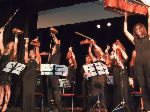
Milan will host the third gathering of a youth orchestra whose members play under “El Sistema,” a Venezuelan education model that makes music accessible to children from lower-income backgrounds as well. Our most talented young musicians from the School for Musical Talents in Ćuprija, who joined the program last October, will attend a summer camp culminating in a major concert at La Scala and the Arcimboldi Theater in Milan before an audience of 5,000. The concerts will take place on August 28 and 29 as part of “Milan Expo 2015,” which aims to promote culture and understanding among peoples and to preserve and protect cultural identities for the benefit of future generations.
Our musicians had to spend much of their school break practicing their instruments, as well as spending time at the school, which welcomed them back in mid-August for final preparations before the trip. They also spent a week with the music director of the Milan camp, conductor Bruno Campo, who was visiting Serbia and the school in Ćuprija for the third time. He and his colleague, violinist Maria Sandberg, worked with them on the challenging repertoire for the final concert.
Alongside this event, another group of children from the music schools “Vladimir Đorđević” in Jagodina and “Milenko Živković” in Paraćin and from the “School for Musical Talents in Ćuprija” will take part in a four-day summer camp while civil society organizations present their work as part of the Berlin Process in Vienna. Together with children from Austria, Croatia, and Bosnia and Herzegovina, they will perform on August 26 before senior guests at this political event organized by German Chancellor Angela Merkel.
The “El Sistema” program began in Venezuela in 1975. It provides free music education to children from poor backgrounds and reaches about four million children in 60 countries around the world.
Đurđa Papazoglu of the “Music Art Project” Association, which runs “El Sistema” in Serbia, says the program is being carried out in cooperation with the Ministry of Education in six cities across the country and reaches 250 children from middle- and lower-income backgrounds.
UNESCO named it the most successful social inclusion program in the world. It was created in response to the alarming number of children in Venezuela who were not attending school and the prevalence of drugs and crime. Music became a way for these children to learn how to live with others and to pursue the harmony and beauty that were missing from their surroundings but that they instinctively sought.
“The program has an impact at three main levels: the individual, the family, and the community. On a personal level, children in orchestras and choirs develop intellectually and emotionally. They learn the principles of leadership, teaching, and practice, develop a sense of duty and responsibility, learn generosity and dedication to others, and see how each person can contribute to achieving major shared goals. All this helps them integrate more fully, adapt to constant change, and develop confidence and self-assurance. Spontaneity makes music a pillar of society, which is the main purpose of this model of education and upbringing. The idea is to bring families together through the joy of making music and the activities of the orchestras and choirs their children belong to,” says Đurđa Papazoglu.
She says that the spiritual world created by music transcends material deprivation. From the moment children learn to play an instrument, they are no longer poor; they are children working toward a professional level who will later become full-fledged citizens who contribute to society. In this way, marginalized groups gain visibility and develop a sense of responsibility for their future.