Claude Debussy: The Birthday of the Most Important Composer
Machine translation from Serbian, not reviewed. Original in Serbian
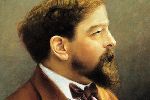
He was born in Paris on August 22, 1862. He played the piano at age seven and was admitted to the Paris Conservatory at just eleven.
He performed across Europe as a pianist and as a conductor of his own works. In 1884, he won the Grand Prix de Rome for his cantata “The Prodigal Son.” In 1887, he returned to his native Paris, where he lived from then on as a reclusive musician and bohemian, struggling to make a living and pursue his art. During this time, he studied the works of Wagner and Mussorgsky, which later influenced him and his art. Debussy introduced whole-tone, pentatonic, and exotic scales into his works, brought innovations to harmony, and broke with the rules of Romanticism. His themes are concise and narrow in range, his rhythmic foundation is shifting and ambiguous, and tone color and harmony are the key elements of his music.
He remained unknown to the wider public until the age of 40. After the performance of his opera “Pelléas and Mélisande,” he became one of the world's best-known composers. He did not enjoy this fame for long; he died in Paris on March 25, 1918.
Some of Debussy's best-known works are the String Quartet in G Minor (a chamber work), Prelude to the Afternoon of a Faun, The Sea (an orchestral work), Five Poems of Baudelaire and Three Poems of Mallarmé (solo songs), Pelléas and Mélisande (an opera), Suite for Piano, Children's Corner, Estampes (piano pieces), and many others.
Author: B. B.