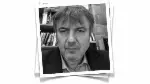
JOSIF MARINKOVIĆ
Machine translation from Serbian, not reviewed. Original in Serbian

Marinković furthered his musical education in Prague and Vienna. He took an active part in developing musical life in Serbia as a conductor, choir director, music educator, and writer. He contributed to music education by working as a music teacher at the Seminary, the Teacher Training School, and the Second Boys’ Gymnasium. He began his artistic career in Belgrade when Serbia was a principality under the Obrenović dynasty. His career ended in 1931, under the Karađorđević dynasty, when Belgrade was the capital of the Kingdom of Yugoslavia. In 1907, he was elected a corresponding member of the SERBIAN ROYAL ACADEMY.
Breaking with the tradition of earlier composers, who used diatonic harmonic progressions, Marinković introduced chromaticism, modulations to distant keys, and enharmonic techniques into his harmony. Drawing on his studies in Prague and Vienna, he skillfully applied these techniques to Serbian melodies and to his own compositions.
Josif Marinković was born on September 15, 1851, in Vranjevo (Banat). He received his first musical training at the Teacher Training School in Sombor. His earliest choral compositions date from that period, as does his Sonatina for piano four hands, the first work of its genre in Serbian music. Over the course of his career, Marinković wrote choral works with piano accompaniment, a cappella choral works, songs for voice and piano, and sacred music.
Choral Works
Marinković introduced another innovation into Serbian music: his “Kola,” or “medleys” or “song sequences.”
The KOLA are 11 compositions in which he arranged songs from Vojvodina and, in Kolo VII, one from Macedonia. In Kola III, V, and IX, he used excerpts from Radičević’s “The Students’ Farewell.”
He composed in the spirit of Serbian folklore without quoting directly from it. Each kolo contains a different number of songs, ranging from 6 to 13.
The choral design of Marinković’s “Kola” suggests the structure of a suite. The expressive power of the folk melodies and their popularity with audiences prompted Mokranjac to incorporate some of the songs from Marinković’s kola into his own Garlands. He used “Come On, Who’ll Buy You?” and “What I Hold Dear” from Kolo VII in his Seventh Garland.
The form of these compositions recalls that of the garlands. In composing his “Kola,” this master of choral music typically repeated the first song at the end, as in Kolo I, or brought back the first two songs, as at the end of Kolo VI.
Among his notable a cappella choral works are Spring Dawn, set to verse by Grčić Milenko; The Heroic Battle Cry; Hymn of the Balkans; and Hey, Trumpeter, which would become the anthem of the “Obilić” choir. All these pieces express patriotism, especially the last, written in 1905. The composer sought to stir the fighting spirit and patriotism of Serbian patriots, as the fanfares, march rhythm, and opening lines show: “Hey, trumpeter from the embattled Drina, sound the assembly call ..”. As early as 1908, war was in the air in Serbia, and patriotic young people sang “Hey, Trumpeter” at political gatherings. It was also a favorite song of Field Marshal Radomir Putnik. During and after World War I, its melody and lyrics rang out with the Serbian army and student soldiers at Cer, Kolubara, Kajmakčalan, Kumanovo, Thessaloniki, Corfu, and Vido. With these patriotic verses, Serbian performers celebrated the spirit and victories of their people, singing the song in France, Italy, England, Switzerland, and Russia.
Another innovation associated with Josif Marinković is choral music with piano accompaniment, a setting he used for women’s and mixed choirs. In these works he explored patriotic as well as lyrical themes, the latter evident in The Contented River, Prayer, and The Watermill. Marinković displays the same Romantic sensibility here as in his solo songs. By imitating the clatter of a mill on a stream, the chirping of birds, and the buzzing of bees in The Watermill, or the sound of bells in Prayer, he showed how thoroughly he understood both the piano and the choir.
Patriotism is evident in the choral works The Poor Mother and On Good Friday.
The title of the piece for mixed choir On Good Friday suggests a sacred composition. It belongs, however, among his patriotic works: using a text by J. J. Zmaj, the composer portrayed the tragedy of the people under Turkish rule through allegory.
Serbia did not have enough trained musicians at the time and consequently had no established orchestras, so choral music was common. Marinković, however, introduced an innovation: piano accompaniment.
Songs for Voice and Piano
Marinković’s greatest contribution was establishing the Serbian solo art song, the first true Romantic Lied. His songs for voice and piano fall into two categories. The first consists of songs set to texts close in spirit to folk poetry. The music likewise has a folk character, laying the foundations for the sevdalinka as a favorite genre in Serbian music. This can be heard in Dear Šana and Stojanka (to texts by D. Ilić) and From Town to Town (by M. Dimitrijević), whose refrain has an Eastern flavor.
The second group consists of settings of literary poetry by Đ. Jakšić, J. J. Zmaj, and Grčić Milenko. Lyricism predominates in these works. Marinković brings it out by exploring the psychology of the text and emphasizing diction without neglecting the role of the piano.
This master of the solo song introduced recitative into the Serbian Romantic Lied, something Serbian composers had not commonly used before. He uses recitative in places to bring out the dramatic character of the songs (Parting by J. J. Zmaj, and The Bush and Prayer by V. Ilić).
Church Music
Marinković also composed church music, as his Divine Liturgy of St. John Chrysostom shows. It was first performed in 1935 thanks to Kosta Manojlović.
Manojlović found sections of the Liturgy among Marinković’s papers and assembled them into a complete work, which the “Marinković” Teachers’ Choral Society performed under the conductor Bajšanski.
In the Liturgy, Marinković did not quote traditional melodies from Serbian church chant, although some recitative passages suggest the tradition of Russian Orthodox chant. Interestingly, Josif Marinković’s church music was not performed during his lifetime, but it gained recognition after his death thanks to Kosta Manojlović. Manojlović also published the Funeral Service, or Memorial Service, and thus we know that the work was dedicated to the memory of Svetozar Miletić.
Josif Marinković left a lasting mark on the generation of Serbian Romantic composers. Unfortunately, even during his lifetime, as new trends arrived from Europe, works by this master of choral music and solo song appeared less and less often on concert programs.
Marinković also ventured boldly into instrumental music, as illustrated by his Serbian Dance for violin. He accompanied a Prague Conservatory graduate in a performance of the piece at a concert attended by King Aleksandar Obrenović. That was in 1901, and the audience was so enthusiastic that the entire work was performed three times as an encore! Despite the success of this violin composition, Marinković was a master of remarkable solo songs, in which he showed a feel for writing for the human voice that even the German masters of the Lied might have envied.
Restless in spirit and unyielding by nature, he rejected all European models toward the end of his life, even the piano, regarding them as ill-suited to Serbian folk music and viewing the voice simply as a gift from God.
On the influence of new European trends and how to respond to them, the composer says: “… nowadays people everywhere write music based on folk motifs, but in a contemporary, modern style. We should therefore do the same here, but for us this should be understood in the following spirit: if the music is vocal, then its task is to convey faithfully the situation described by the words … it should be crafted in keeping with the advances of our age and based on characteristic features of our folk melodies … Whoever abandons this ground where both have equal standing … will always be working for others, but NOT for our music … This in no way denies the need for foreign music, but no musician can take credit for promoting foreign music to the point of harming our own. This is all the more misguided because our art music is not yet so highly developed that a flood of Western music cannot harm it .. .”
This set him apart from the new generation of composers, helping to give his works an aura of their own even as they unfortunately began to fall into obscurity. Yet the aura and patina that gather around a work of art lend it a special quality, and so Josif Marinković’s body of work is being brought into the light and receiving the recognition it deserves.
For more than half a century, students at Music School “Josif Marinković” in Zrenjanin have kept the memory of Marinković and his music alive, saving him from obscurity and carrying forward the renown of his works and their school!